
The Deception of the new age & the massive cost.
- Lisa Li
- Apr 1
- 2 min read
I took a deep dive into the roots of the New Age recently, and it turns out so much of it was created from the ideas inside Satanism.
Not in the way people might immediately imagine—rituals or dark imagery—but in something far more subtle: a shared emphasis on the self as the ultimate authority.
When you start tracing influences back through modern spiritual movements, you come across figures like Aleister Crowley and Helena Blavatsky, whose ideas helped shape what would eventually become today’s New Age thinking.
Even widely popular teachings—like The Power of Now by Eckhart Tolle, The Secret, or the work of Deepak Chopra—often guide people toward the idea that we are ultimately just energy, and that we are in control of everything.
While these ideas are presented as enlightening, they subtly shift focus away from a creator and toward the self.
At the center of many of these philosophies is a recurring theme: the elevation of personal will. Aleister Crowleyfamously framed it as “Do what thou wilt,” a concept that, over time, has been softened and repackaged into modern phrases like “live your truth” or “manifest your reality.”
On the surface, these ideas sound empowering—and to some extent, they are. They encourage responsibility, independence, and the search for meaning. But taken to their extreme, they begin to blur an important line.
Because if the self becomes the highest authority, then truth becomes flexible. Morality becomes personal. And reality itself is treated as something shaped purely by belief.
That shift may seem small, but it carries real weight.
It can lead people into cycles of constant seeking—always trying to align their thoughts, energy, or mindset to produce results that don’t always come.
It can create pressure to believe harder, do more, or blame themselves when things fall apart. And in many cases, it opens the door to systems that are more about consumption than clarity—courses, teachings, and experiences that promise transformation but rarely deliver anything lasting.
The deeper issue isn’t just where these ideas came from, but where they lead.
Because when something is built on the idea that the self is ultimate, it quietly removes the need for anything beyond it—any external truth, any higher standard, any grounding outside of personal perception.
And that’s a cost most people don’t see until they’ve already paid it. And even then, many are too invested to question it.
The New Age, in many ways, takes elements of truth and reshapes them into something centered largely on the self.
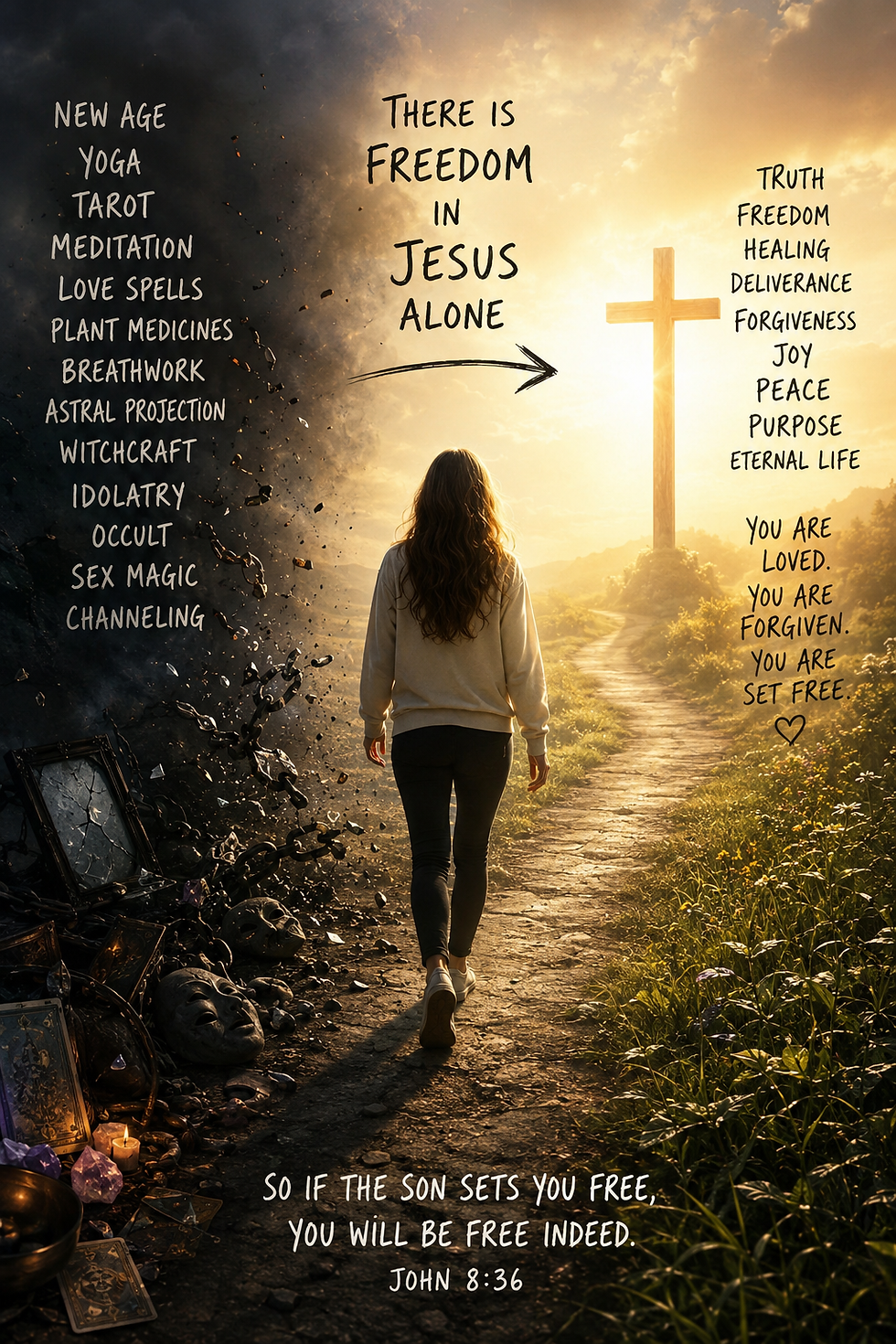
And if the Bible is, in fact, truth, then this shift has serious implications.
The humility required to admit sin and seek salvation can be completely bypassed—replaced by a continual elevation of self rather than surrender to God.
Could this be the ultimate deception by Satan -- To keep us from being saved by God?
What if the greatest deception isn’t obvious darkness—but a convincing substitute for truth?


Comments